Great service from start to finish. The team was professional, reliable, and very easy to work with. Communication was always clear, and they kept me informed throughout the entire process.
Privacy window film, without closing the blinds
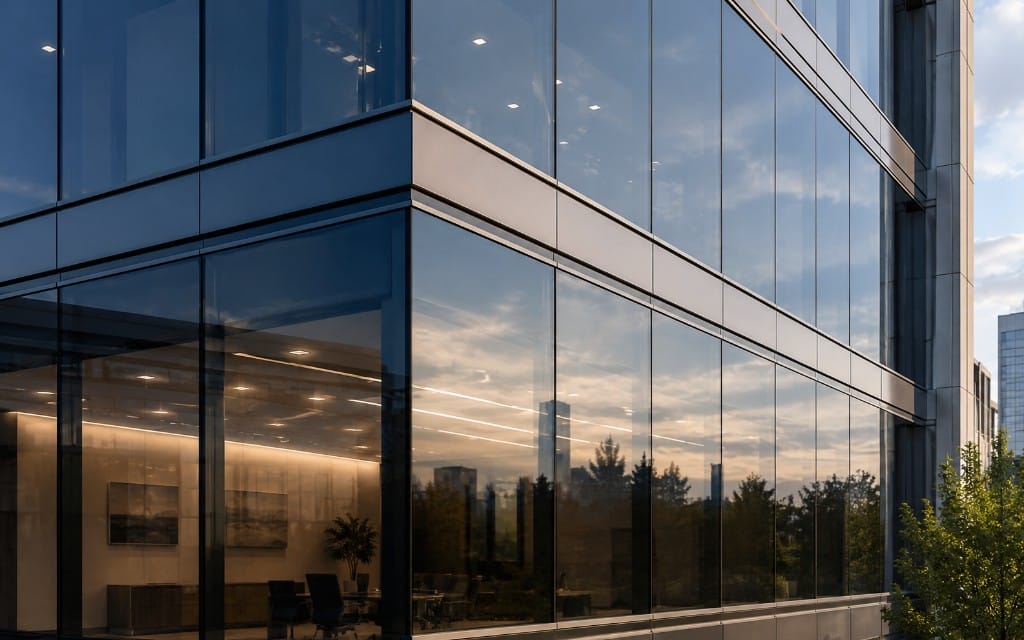
Film that reduces how much can be seen in from outside while keeping your daylight and your view out. For ground floor condos, offices, and street facing glass.
See all window film solutions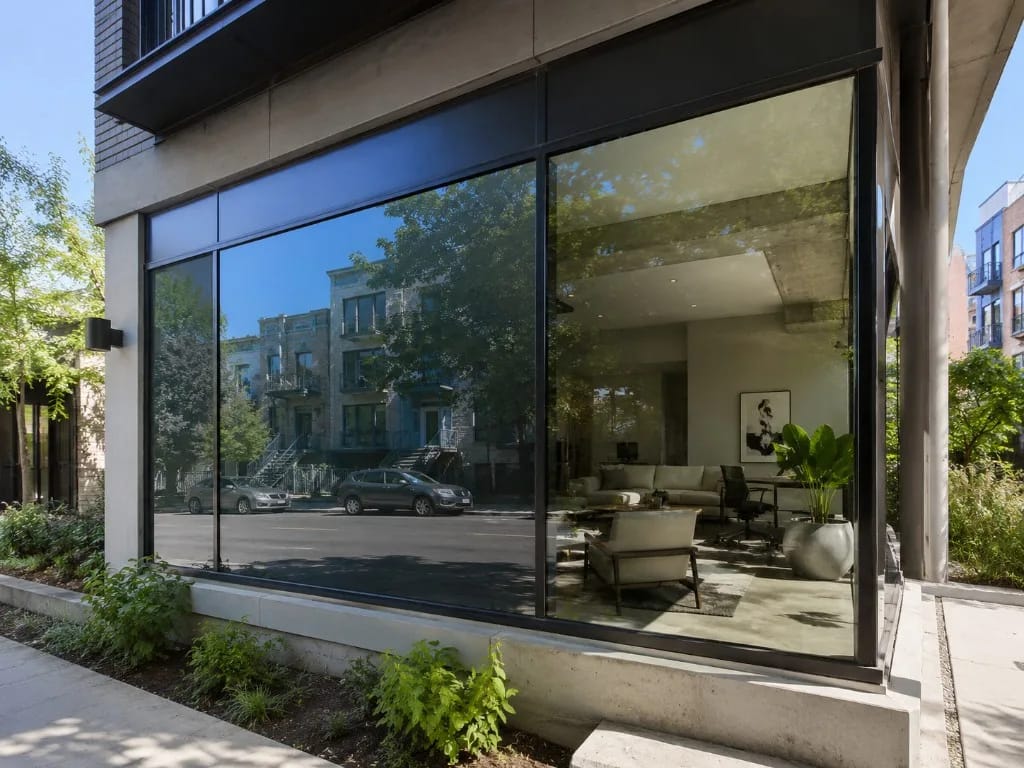
Overview
Privacy film changes how much can be seen through the glass without taking away the light. It is the first thing to specify when neighbours, pedestrians, or an adjacent building have a clear view into the space and the alternative is keeping blinds closed all day. The effect works on daylight balance: it is strongest when it is brighter outside than inside, which covers daytime hours. After dark that balance reverses, which is why bedrooms and street facing glass need that factored into the specification from the start.
Best for
- Condos and ground floor units that face the street or a sidewalk
- Bedrooms and bathrooms with direct sightlines from neighbours
- Storefronts and offices where daytime visibility into the space is a problem
- Workstations and screens positioned near exterior glass
- Spaces where you want privacy without losing natural light during the day
What it solves
- Daytime visibility into the space from outside
- Neighbour and pedestrian sightlines at ground level
- Screen and workspace exposure near windows
- The need to keep blinds open for light but closed for privacy
- Glare and heat alongside privacy, when a solar grade film is specified
What to know
- Privacy is strongest when it is brighter outside than inside. At night the effect reverses, so plan for it on bedrooms and street facing glass. Interior lighting and window coverings handle the evening.
- Reflective and mirror films use the same one way daytime approach. Private from the brighter side during the day, with a mirror look on the exterior in sun.
- Neutral dark films add privacy with less mirror effect, and usually help with heat and glare at the same time.
- Condo boards and commercial landlords often have rules on exterior appearance. Reflective films may need approval before install.
- Interior partitions and frosted zones are decorative film, not exterior privacy tint. See frosted glass film for constant day and night privacy.
Specifying the film
Product types to consider
Start here before the SKU level. These are the categories we use to narrow the right XPEL film.
Reflective or mirror, one way daytime
The strongest daytime privacy and the standard one way mirror look when it is brighter outside than inside. Also delivers high solar rejection. The night time reversal applies.
Neutral dark privacy
Darker tint with less mirror effect. Specified when you want more privacy and some heat and glare control without a reflective exterior appearance.
XPEL examples we specify
Published performance data from XPEL VISION. Exact results depend on glass, orientation, and the full glazing assembly.
Evening View 5 (XVEVE05)
8% VLT, 57% exterior reflectance, 81% total solar energy rejected, 99% UV rejection, 92% glare reduction.
A mirror look on the exterior by day for maximum daytime privacy. Best for condos and ground floor units facing the street, and for south or west glass.
In plain terms: from the street this reads as a mirror during the day. From inside you see out clearly. It is the strongest daytime privacy we specify, and it stops most of the heat as well.
Dark Neutral 15 (XVDN15)
12% VLT, 20% exterior reflectance, 70% total solar energy rejected, 99% UV rejection, 86% glare reduction.
Darker privacy without a strong mirror look, where a reflective exterior is not wanted or not permitted.
In plain terms: darker glass without the mirrored exterior. Choose this when a reflective look is not wanted, or not permitted, on the building.
Compare the four families
Privacy film against the other three
Privacy film is one of four families we install, and the choice between them is usually made on four properties. This is where each family lands, using one representative product from each so the comparison is like for like. If you are specifying for a board or a tenant, this is the table to bring.
| Film family | Representative product | Visible light | Solar heat | Glare | Privacy effect |
|---|---|---|---|---|---|
| Privacy | Evening View 5 | 8% | 81%rejected | 92%reduction | Strong, daytime only. Reverses after dark. |
| Solar control | Clear View Plus 70 | 72% | 55%rejected | 20%reduction | None. The glass stays near clear. |
| Security | Security Clear 8mil | 89% | Not a solar product | Not rated | None. Fully transparent. |
| Frosted and decorative | White Frost | 65% | 33%rejected | 28%reduction | Constant, day and night. No view out. |
Nominal values from XPEL VISION published data on 1/8 inch (3mm) glass. Shown to compare families, not as a performance guarantee. Every family carries lighter and darker options than the single product listed here.
Specification and install
Specifying and installing privacy film
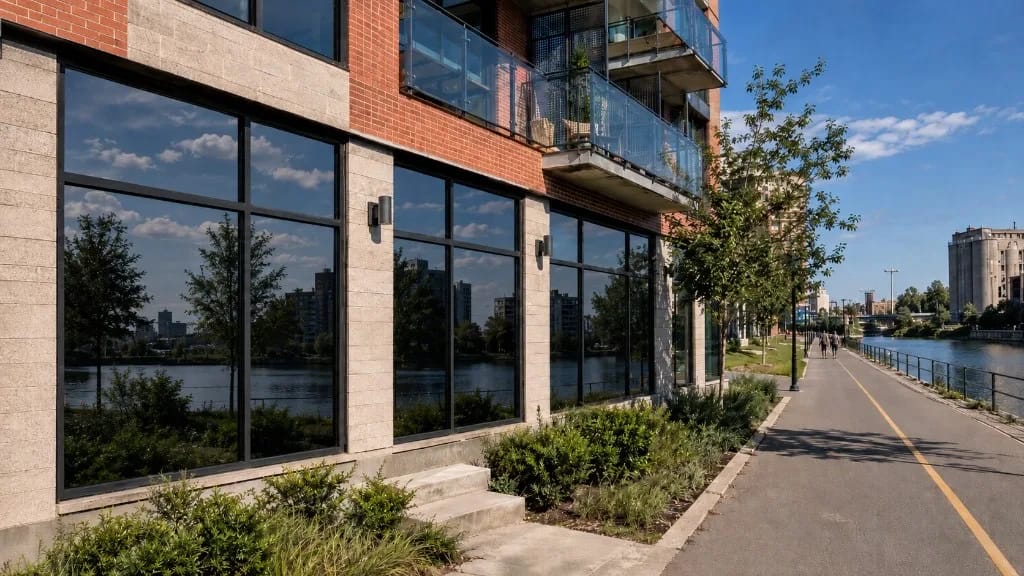
Read the glass before specifying the film
Every quote starts with what is already in the opening. Single pane, double glazed, tempered, laminated, and low-E coated glass all accept film differently, and a product that performs correctly on one assembly can be the wrong call on another.
The concern on sealed double glazed units is thermal stress. A dark, highly absorbing film raises the temperature of the pane it is bonded to, and on an assembly that is already absorbing heat, that added load is what cracks glass or stresses the perimeter seal. Manufacturers publish which films are cleared for which assemblies, and that is the constraint we work inside rather than around.
Whether the glazing is still under warranty from the window supplier matters too. Some sealed unit warranties are affected by applied film. We raise that before anything is ordered, not after it is on the glass.
Specify per elevation, not per building
Running one film across every window in a building is the most common specification error we are asked to correct. The problem is not the same on each face, so the answer should not be either.
West facing glass takes the hardest hit. Late afternoon sun sits low and enters almost horizontally, which is the worst angle for both glare and heat, and it arrives at the end of the day when the space has already been warming for hours. This is the elevation where the strongest privacy and solar specification is justified.
South facing glass carries the highest total annual solar load in Montreal, but the summer sun angle is high, so less of it comes straight through the opening. In winter that same exposure is doing useful work warming the space, which is a real argument against over darkening it.
East facing glass gets sharp morning glare with much less accumulated heat. North facing glass gets almost no direct solar gain, so film on a north elevation is specified for privacy, UV, or security, and not for heat at all.
Street level and courtyard glass are specified by sightline rather than by compass direction. What decides it there is who can see in, from what distance, and at what height. A ground floor unit facing a sidewalk two metres away is a different problem from a third floor unit facing a parking lot.
What the installation actually involves
Film is applied to the interior face of the glass. The glass is scraped and cleaned first, because anything left on the surface, mineral deposits, paint flecks, adhesive from an older film, will read as a defect once there is film over it. Preparation is most of the labour on most jobs.
Application is wet. A slip solution lets the film be positioned before it is squeegeed down, so expect water on the glass, the sill, and the protective sheeting below. Furniture within about a metre of the glass needs to be moved clear and window coverings taken down or lifted out of the way.
Film is trimmed to a small deliberate gap at the edge of the glass rather than butted hard to the frame. That gap is correct and not a defect. It lets residual moisture leave and keeps the edge from lifting a year later.
The cure period, and cleaning afterwards
The film is not at its final appearance the day it goes on. For the first few weeks it can look slightly hazy, or show small water pockets or a faint texture. That is residual moisture behind the film leaving through the film as it cures, and in Montreal it takes noticeably longer in the cold months than in July.
Do not clean the film during that period and do not try to press the pockets out. Once cured, clean with a soft cloth and a mild soap solution or a non ammonia glass cleaner. Ammonia based products and abrasive pads will damage the surface over time. Nothing else about maintaining the glass changes.
What to settle before you buy
Decide what the evening looks like. Daytime privacy is what reflective and neutral dark films deliver well, and a lit room at night is visible from the street regardless of the product. If a bedroom or a street facing living room needs privacy after dark, that is solved with window coverings or with frosted film on the lower portion of the glass, and it should be settled at specification rather than discovered in November.
Confirm the exterior appearance rules that apply to you. Condo declarations and commercial leases frequently regulate the look of the facade, and reflective film is the category most often restricted. Getting the syndicate or the landlord to approve a sample before the order is placed avoids an expensive removal.
Decide whether you want privacy alone or privacy with solar performance. Reflective privacy films reject a large share of solar heat as a by-product, which on a west or south elevation is worth having. On a north elevation you are paying for performance the exposure will never use.
What shapes the quote
How a privacy film quote is built
There is no catalogue rate for architectural film, and a number given before anyone has seen the glass is a guess. A real quote comes from measuring the openings, identifying the glass, and specifying a product against what the space actually needs. What follows is what moves the total, so you can read a quote and understand why it says what it says.
What drives the variation
Glass area and pane count
Total area sets the baseline, but the number of separate panes matters just as much. Many small divided lites take far longer than the same area in a few large ones, because every pane is measured, cut, positioned, and squeegeed on its own.
The film specified
Material cost varies widely across the range. A near clear spectrally selective film and a heavy security laminate are nowhere near each other, and the reflective privacy films sit between them. The specification follows the requirement, and the requirement moves the price.
Access and working height
Glass reachable from the floor is the straightforward case. Anything needing ladders, scaffold, or a lift adds both time and equipment. Atrium glazing, stairwell glass, and tall storefront headers are where this shows up most often.
Condition of the existing glass
Old film that has to come off first is the largest single variable we encounter. Aged adhesive is slow to remove and the glass has to be brought back to properly clean before new film goes on. Heavy mineral staining and construction residue add prep time the same way.
Occupancy and scheduling
Daytime work in an empty suite is the cheapest case. After hours, weekend, or phased floor by floor work to keep a tenant operating costs more, because the schedule is dictating the labour rather than the other way around.
Site logistics
Downtown and Plateau addresses with no loading access, booked elevator windows, or restricted street parking add time before any film is touched. A suburban ground level site with a door to park beside does not.
We do not quote by the square foot over the phone. You get a fixed price for a defined scope after the glass has been measured and identified, itemised by elevation so you can see where the cost sits and phase the work if you would rather do it in stages.
Questions
Common questions about privacy film
The questions we are actually asked on site visits, answered directly.
- Does privacy window film work at night?
- Not in the same way. Daytime privacy depends on it being brighter outside than inside. After dark that reverses, so a lit room is visible from the street. Bedrooms and street facing glass need window coverings or frosted film for evening privacy.
- Can people see in during the day?
- With a reflective or neutral dark film specified correctly, no. From outside the glass reads as a mirror or a dark panel while you keep a clear view out. The effect is strongest in bright conditions and softens under heavy overcast.
- How much does privacy window film cost?
- It is quoted per project, not from a rate card. Glass area, the film specified, access, and the condition of the existing glass all move the number. We measure on site and issue a fixed price before anything is scheduled.
- How long does privacy film last?
- Interior film on vertical architectural glass generally holds up well beyond a decade, and XPEL carries a manufacturer warranty on the products we install. Exposure, orientation, and whether the glass is cleaned correctly all affect real service life.
- Will privacy film damage my windows?
- Not when it is specified for the glass it goes on. The risk on double glazed and low-E units is thermal stress, which comes from putting a heavily absorbing film on an assembly that cannot carry it. That is why we read the glass first.
- Do I need condo board approval?
- Usually yes for anything that changes exterior appearance. Most Montreal condo declarations regulate the look of the facade, and reflective film is the type most often restricted. Ask the syndicate before ordering. Neutral films are approved more readily than mirrored ones.
- How long does the installation take?
- Most condo and small office jobs finish within a day. Glass needs to be clear and accessible for about a metre, and the area stays wet during application. Larger commercial elevations are scheduled by floor, after hours where occupancy requires it.
- Can privacy film be removed later?
- Yes. Film is removable and the glass underneath is not altered, though removal is a labour job rather than a peel. Older film and baked adhesive take longer. Removing existing film is quoted as its own line when it is part of a job.
Reviews
What clients say on Google
5.0out of 5
23 Google reviews
Rated 5.0 out of 5 from 23 Google reviews.
Excellent service from Privé Window Films! The team was professional, knowledgeable, and paid great attention to detail throughout the installation. The finished result looks fantastic, and the added privacy and heat reduction have made a noticeable difference. Thanks again guys!
Reviews come from our Google Business Profile and appear as Google returns them, most relevant first. We do not select, edit, or reorder them.
Read all reviews on GoogleBest spaces
Get a film recommendation for your glass
Tell us the space, the orientation, and what you need the glass to do. We specify the film and quote the install.
Values from XPEL VISION published data, tested on 1/8 inch (3mm) glass. Nominal and for guidance. Exact results depend on the product specified and the glazing assembly.