Great service from start to finish. The team was professional, reliable, and very easy to work with. Communication was always clear, and they kept me informed throughout the entire process.
Security film, to hold the glass together
Film that helps hold glass fragments in place after impact or breakage, slowing forced entry and reducing injury risk.
See all window film solutions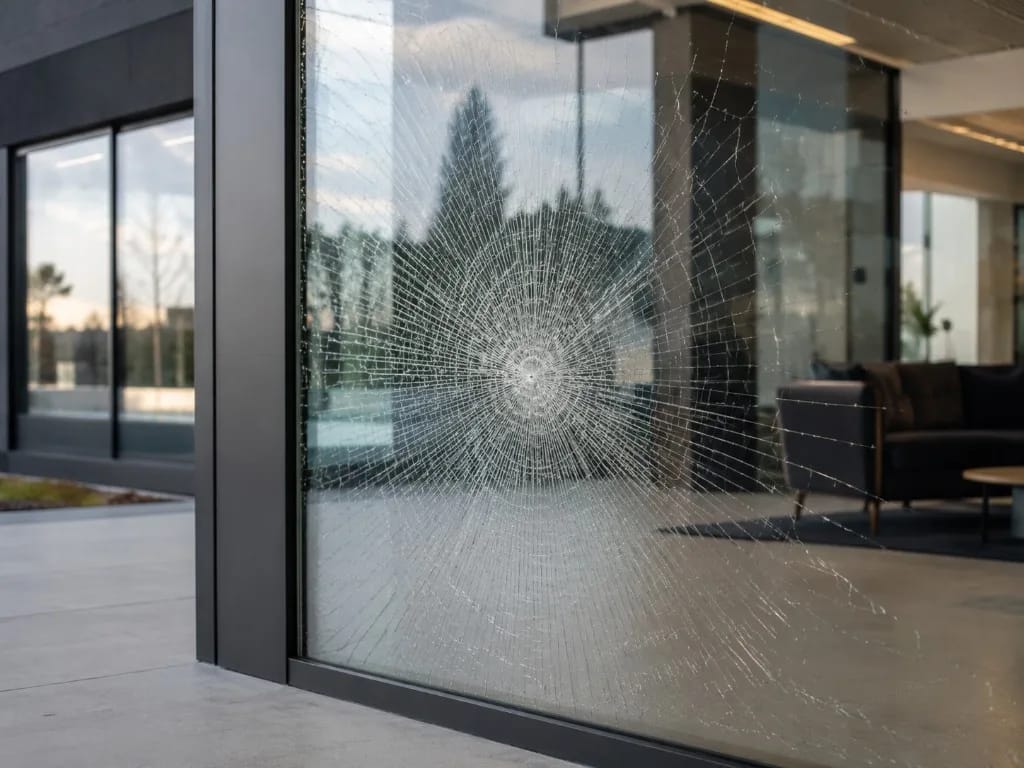
Overview
Security film is a thick, multi layer polyester bonded to the glass with a strong adhesive. It does not make glass unbreakable and no film does. What it does is hold the fragments to the film after the glass breaks, so the pane stays in the opening instead of collapsing. That changes two outcomes: someone attempting entry through the glass has to keep working at it rather than stepping through, and the fragments do not spread across the floor as loose shards. Thickness is specified in mil, and the level chosen depends on what the glass is protecting and how exposed it is.
Best for
- Storefronts and commercial entrances at street level
- Schools, daycares, and institutional entrance glazing
- Ground floor glass in exposed or low traffic locations
- Interior glass where breakage would be an injury risk
- Buildings where glass replacement is disruptive or costly
What it solves
- Glass breaking into loose fragments across a floor
- Forced entry attempts through glazing
- Injury risk from broken glass in occupied spaces
- Vulnerable entrance and vestibule glass
- Repeat glass replacement costs from breakage
What to know
- Security film does not make glass unbreakable. It holds fragments together, which slows access and reduces injury. Anyone claiming otherwise is overselling it.
- Thickness is measured in mil. Higher mil means more puncture and break resistance. 4 mil, 8 mil, and 14 mil are the standard tiers.
- Clear security film adds no privacy and little solar control on its own. Those needs are met by specifying a combined product.
- Anchoring matters. Film alone holds the glass together, but attachment systems at the frame edge determine whether the pane stays in the opening under sustained force.
- Combined versions exist, such as 8 mil security with a silver solar finish, which delivers glass retention, daytime privacy, and heat rejection on the same pane.
Specifying the film
Product types to consider
Start here before the SKU level. These are the categories we use to narrow the right XPEL film.
Clear security
Transparent, no change in appearance. Available in 4, 8, and 14 mil depending on the protection level required.
Combined security
Glass retention plus privacy or solar control on the same glazing, for exposed elevations that need both.
Anti graffiti
A sacrificial layer applied over glass that is removed and replaced after tagging or scratching, protecting the glass beneath.
XPEL examples we specify
Published performance data from XPEL VISION. Exact results depend on glass, orientation, and the full glazing assembly.
Security Clear 8mil (XVSC8M)
89% VLT, 99% UV rejection, multi layer construction, 240 lbs/in break strength, 141 lbs puncture strength.
Transparent protection with no change to the look of the glass.
In plain terms: the standard specification for entrance glazing and ground-floor glass. Optically clear, so nobody will know it is there.
Security Clear 14mil (XVSC14M)
88% VLT, 99% UV rejection, 420 lbs/in break strength, 230 lbs puncture strength.
The heaviest clear tier, for the most exposed glazing.
In plain terms: specified where the threat level or the code requirement is higher. Same clear finish, roughly double the break strength.
Security 8mil Silver 15 (XVSS8M15)
15% VLT, 79% total solar energy rejected, 99% UV rejection, 84% glare reduction.
Security, daytime privacy, and solar control combined on one pane.
In plain terms: the same holding strength as clear 8 mil, with solar performance added. Specified when the glass needs to hold together and cut heat.
Compare the four families
Security film against the other three
Security is one of four families we install, and it is the one most often bought alongside another. This is where each family lands on the properties buyers weigh, using one representative product from each. Note that clear security film does nothing for heat, glare, or privacy on its own, which is why combined products exist.
| Film family | Representative product | Visible light | Solar heat | Glare | Privacy effect |
|---|---|---|---|---|---|
| Privacy | Evening View 5 | 8% | 81%rejected | 92%reduction | Strong, daytime only. Reverses after dark. |
| Solar control | Clear View Plus 70 | 72% | 55%rejected | 20%reduction | None. The glass stays near clear. |
| Security | Security Clear 8mil | 89% | Not a solar product | Not rated | None. Fully transparent. |
| Frosted and decorative | White Frost | 65% | 33%rejected | 28%reduction | Constant, day and night. No view out. |
Nominal values from XPEL VISION published data on 1/8 inch (3mm) glass. Shown to compare families, not as a performance guarantee. Every family carries lighter and darker options than the single product listed here, and security film is also available combined with a solar or privacy finish.
Specification and install
Specifying and installing security film
Choosing the thickness tier
Security film is specified in mil, which is thousandths of an inch. The standard tiers are 4, 8, and 14 mil, and the jump between them is not marketing. Published break strength and puncture resistance roughly double between the 8 mil and 14 mil clear products we install.
4 mil is the safety tier. Its job is fragment retention, keeping broken glass from spreading as loose shards across a floor. It is the specification for interior glazing, sidelights, and any pane where the concern is injury rather than intrusion.
8 mil is the general commercial standard and the tier most storefronts should be at. It holds the pane in the opening after impact and turns a single strike entry into sustained, loud, visible work. For most retail, office entrances, and institutional glazing this is the right answer.
14 mil is for the most exposed glass: street level frontage with a history of attempts, cash handling environments, pharmacy and dispensary glazing, and anywhere the glass is the only barrier. It is heavier to work with and costs more, and on the right opening it is worth both.
Film alone against film with an attachment system
This is the part most quotes leave out, and it decides whether the specification actually performs. Film bonds to the face of the glass. It holds the fragments together into a single sheet, which is most of the benefit. But that sheet is still sitting in a frame, held by whatever glazing bead or gasket the window was built with.
Under sustained force, the failure mode changes. Instead of the glass breaking into an opening, the whole filmed pane can come out of the frame as one piece. That is better than shards, but it is still an opening.
Attachment systems close that gap. A structural sealant bead or a mechanical batten anchors the filmed glass to the frame itself, so the pane has to be defeated rather than pushed out. Whether it is justified depends on what is behind the glass and how long you need the delay to last. On a school entrance or a ground floor pharmacy it usually is. On an interior partition it is not.
Anyone quoting security film for a genuine forced entry concern without raising anchoring is quoting half a system.
What the installation actually involves
Film is applied to the interior face of the glass. The glass is scraped and cleaned first, and on heavy security film that preparation matters more than on any other product, because a thick film over a contaminated surface will not bond properly and the defect is permanent.
Application is wet. A slip solution lets the film be positioned before it is squeegeed down. Heavier tiers are stiffer and harder to handle, so 14 mil on a large pane is a two person operation and takes longer per square foot than clear solar film.
Film is trimmed to a small deliberate gap at the edge of the glass. That gap is correct on standard installations. Where an attachment system is specified, the sequence changes: the film runs to the edge and the sealant or batten is applied over it into the frame, and that step needs cure time before the opening is back in full service.
For the first few weeks the film may look slightly hazy or show small water pockets while residual moisture clears. Thicker film takes longer than thin film, and cold months take longer than warm ones. Do not clean it during that period.
What security film does not do
It does not make glass unbreakable, and no film from any manufacturer does. Glass under a hammer still breaks. What changes is that it stays in one piece and stays in the opening.
It is not bullet resistant. That is a different product category built to a different standard, and any supplier blurring the two is selling you something you did not buy.
Clear security film adds no privacy and effectively no solar control. If the same glass also needs heat rejection or daytime privacy, that comes from specifying a combined product, such as an 8 mil security film with a silver solar finish, rather than from layering two films.
It also does not replace an alarm, a camera, or a response plan. What it buys is time and noise, which is only useful if something is set up to use them.
What to settle before you buy
Decide what you are protecting against, because safety and security are different specifications. Fragment retention for occupant injury is a 4 mil conversation. Delaying a forced entry is an 8 or 14 mil conversation, and it brings anchoring with it.
Check whether any code or insurance requirement applies to your glazing. Institutional and educational buildings frequently have safety glazing obligations at specific locations, and some insurers recognise security film in their assessment. Both are worth confirming before you specify, because they can change the tier you need.
Confirm the glass itself is sound. Security film bonded to a pane that is already chipped, stressed, or in a failing frame is treating the wrong problem. We flag that on the site visit rather than filming over it.
What shapes the quote
How a security film quote is built
There is no catalogue rate for architectural film, and a number given before anyone has seen the glass is a guess. Security film in particular spans a wide range, because the tier and the anchoring decision change the scope more than the square footage does. What follows is what moves the total, so you can read a quote and understand why it says what it says.
What drives the variation
The thickness tier specified
This is the largest single driver on a security job. Material cost rises with mil, and so does labour, because heavier film is stiffer, slower to position, and often needs two installers on a large pane. The gap between a 4 mil safety spec and a 14 mil clear spec is substantial.
Attachment system, if specified
Anchoring the filmed glass to the frame with structural sealant or a mechanical batten is a separate scope with its own materials, labour, and cure time. It is quoted as its own line so you can decide opening by opening rather than building wide.
Glass area and pane count
Total area sets the baseline, but pane count matters as much. Divided lites, transoms, and door glass take disproportionately longer than their square footage suggests, and entrances are usually made of exactly those.
Access and working height
Glass reachable from the floor is the straightforward case. Storefront headers, transoms above entrances, and atrium glazing need ladders or lifts, which adds time and equipment. Exterior applied products, where specified, add more.
Condition of the existing glass
Old film that has to come off first is the largest prep variable, and heavy security film is less forgiving of a poorly prepared surface than any other product. Mineral staining, adhesive residue, and construction debris all add time before installation starts.
Occupancy and scheduling
Retail and institutional glass usually cannot be worked on during operating hours, so security jobs land after hours or on weekends more often than other film work. Schools are typically scheduled into breaks. The schedule dictates the labour and the labour shows in the price.
We do not quote by the square foot over the phone. You get a fixed price for a defined scope after the glass has been measured and identified, with the tier and any anchoring itemised per opening, so you can put 14 mil where it is justified and 8 mil where it is not.
Questions
Common questions about security film
The questions we are actually asked on site visits, answered directly.
- Does security film make glass unbreakable?
- No, and no film does. The glass still breaks. What changes is that the fragments stay bonded to the film and the pane stays in the opening instead of collapsing, so there is no clear way through. Anyone claiming otherwise is overselling it.
- How much does it actually slow someone down?
- There is no fixed number and anyone quoting one is guessing. What changes is that breaking the glass no longer creates an opening. The pane holds and an intruder has to keep working at it, loudly and in full view, which is what ends most attempts.
- What thickness do I need?
- 4 mil for fragment retention and injury risk on interior glass. 8 mil for most storefronts, entrances, and institutional glazing. 14 mil for the most exposed street level frontage. The right tier depends on what is behind the glass, not on the building type.
- How is security film priced?
- Per project, not from a rate card. The tier specified is the biggest driver, followed by pane count, access, and whether an attachment system is included. We measure on site and issue a fixed price itemised per opening.
- How long does security film last?
- Interior film on vertical architectural glass generally holds up well beyond a decade, and XPEL carries a manufacturer warranty on the products we install. Clear security film on interior or shaded glass is among the least stressed applications in the range.
- Does security film damage the glass?
- No. Clear security films carry high visible light transmission and add no meaningful solar absorption, so the thermal stress concern that applies to dark solar films is not the issue here. The glass has to be sound to begin with, which we check on the visit.
- Do I need an attachment system as well?
- For genuine forced entry concerns, usually yes. Film holds the glass together, but without anchoring the whole filmed pane can be pushed out of the frame under sustained force. Structural sealant or a batten fixes the pane to the frame. On interior glass it is unnecessary.
- How long does installation take?
- A storefront usually finishes within a day. Heavier tiers take longer per pane than clear film, and anchoring adds cure time before the opening is back in full service. Retail and school work is normally scheduled after hours or into breaks.
Reviews
What clients say on Google
5.0out of 5
23 Google reviews
Rated 5.0 out of 5 from 23 Google reviews.
Excellent service from Privé Window Films! The team was professional, knowledgeable, and paid great attention to detail throughout the installation. The finished result looks fantastic, and the added privacy and heat reduction have made a noticeable difference. Thanks again guys!
Reviews come from our Google Business Profile and appear as Google returns them, most relevant first. We do not select, edit, or reorder them.
Read all reviews on GoogleBest spaces
- Storefronts and retail
- Schools and daycares
- Entrances, vestibules, and ground floor glazing
- Institutional and commercial buildings
Get a film recommendation for your glass
Tell us the space, the orientation, and what you need the glass to do. We specify the film and quote the install.
Values from XPEL VISION published data, tested on 1/8 inch (3mm) glass. Nominal and for guidance. Exact results depend on the product specified and the glazing assembly.